
ADVICE · JUNE 26, 2026 · BY DAVID MELNYCHUK
The Best Time of Year to Remodel: A PA Contractor's Honest Calendar
Homeowners plan remodels around the weather. Contractors plan them around the phone, and the phone has seasons of its own. The two calendars do not match, and the gap between them is where you either save real money or pay rush prices for the privilege of calling when everyone else calls.
Here is the year as it actually looks from inside a Lancaster County remodeling crew: when we are begging for work, when we are turning it away, what genuinely cannot be built in the cold, and what only looks like it cannot.
The contractor's year in four lines
The short version, before the detail:
- Winter, January to March: interior gold. Slow phones, flexible schedules, the best pricing of the year, fast permits.
- Spring, April to May: the rush. Everyone calls at once, lead times stretch, some contractors price high just to thin the line.
- Summer, June to August: exterior prime time, and a quietly good window for interiors while everyone assumes we only build decks.
- Fall, September to November: the sweet spot. Good weather, sane schedules, and the last exit before holiday deadlines.
Winter: the interior bargain window
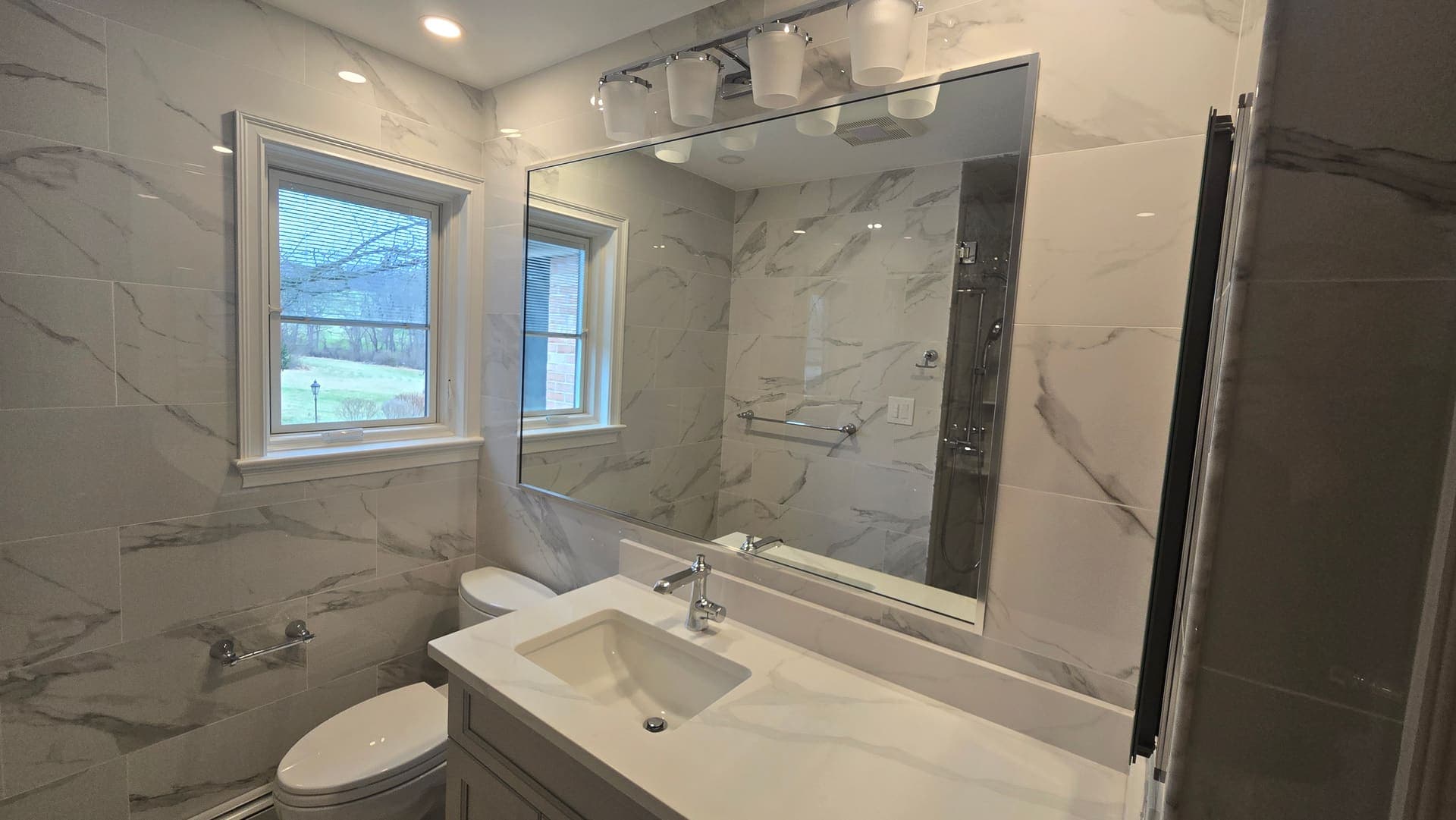
From January through March the remodeling phone goes quiet, and quiet phones change behavior. A crew with a gap in February will sharpen a bathroom or basement number in a way the same crew in May simply will not, because May sells itself. Clients with schedule flexibility routinely do 5 to 10 percent better on interior work in winter, not from a coupon, but because winter jobs slot together efficiently and nobody is paying rush premiums for materials or labor.
The hidden winter bonus is speed. Municipal permit desks that take 4 to 6 weeks in the spring rush turn the same interior remodeling permit in 2 to 3 weeks in January. Suppliers deliver faster. Inspectors show up on the first date offered. Your bathroom is inside a conditioned house, and the season outside the window is irrelevant to the tile going on the wall. Winter is objectively the smartest time to buy interior work, and every year almost nobody does. The one real caveat: kitchens in winter mean weeks of microwave dinners without a grill on the deck as backup, so plan the temporary kitchen a little more carefully.
Winter exteriors happen too: our February deck
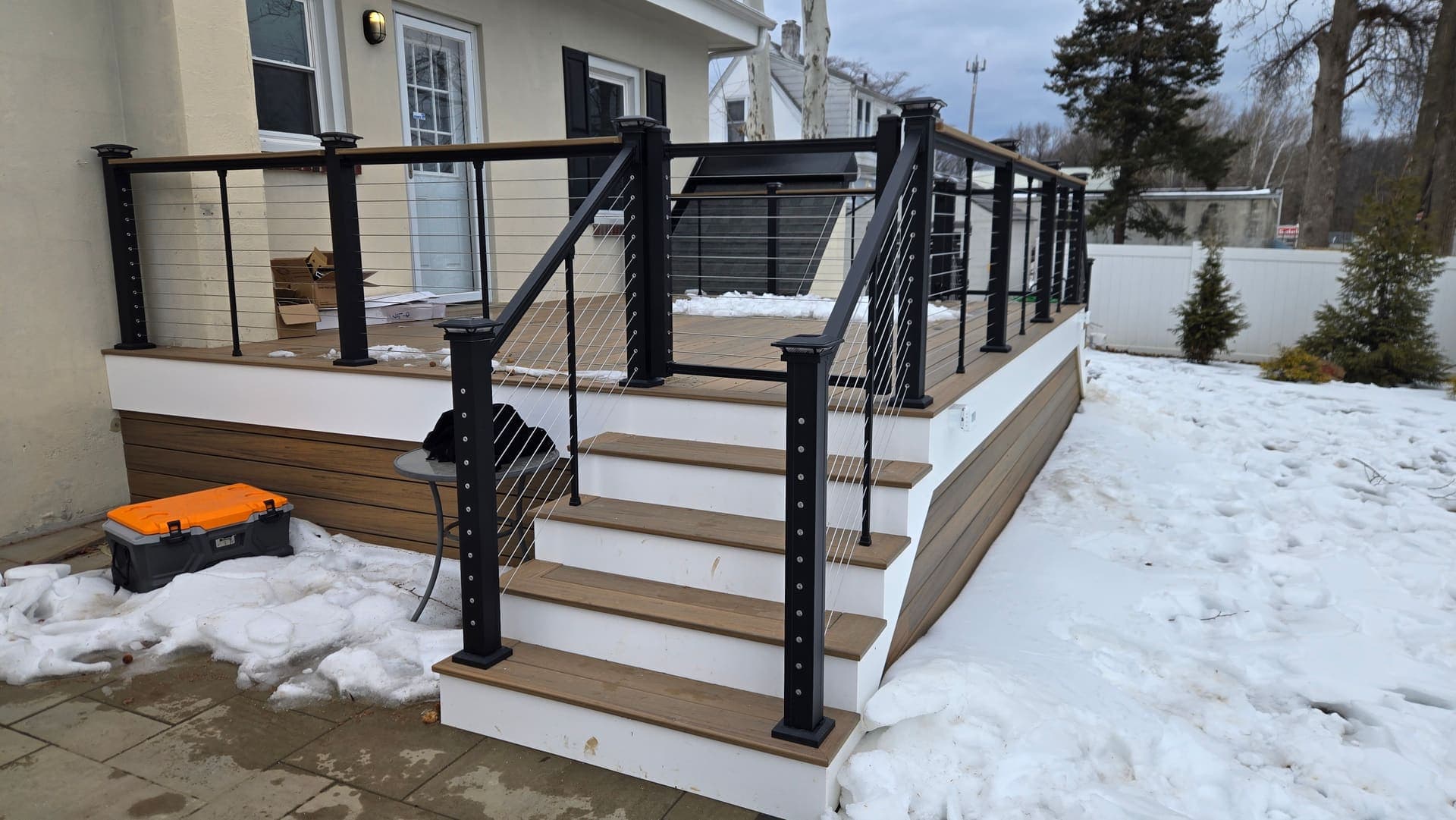
The assumption that exterior work hibernates costs homeowners months of waiting for no reason. We built a composite deck with cable railing near Elizabethtown in ten February days, in actual snow, and it is one of the cleanest builds in our portfolio. Frost line footings get dug and poured with the right timing and cold weather practice, framing hardware does not care about temperature, and composite decking installs fine in winter with the gapping adjusted for expansion, exactly as the manufacturer tables specify. The structural rules in the American Wood Council's DCA 6 deck guide apply in February the same as July.
The crew wears more layers. The deck does not notice. What winter actually restricts is a shorter list than people think: exterior painting and staining below roughly 40 degrees, some concrete finishing in hard freezes, and roofing shingle sealing in deep cold. Framing, decking, windows, doors, and siding all proceed. The client who books a deck build for February grills on it in April, while their neighbor who waited for nice weather is still on a June waitlist watching it happen over the fence.
Spring: the rush and what it costs you
The first warm Saturday in March flips a switch in every homeowner in the county, and by April the whole industry is triaging. Lead times that were two weeks in January stretch to eight or ten. Permit desks slow under volume. And pricing quietly firms up: when a contractor has thirty estimates pending and capacity for eight, some of those quotes are priced to lose on purpose. Nobody advertises this. Everybody does it.
Spring is not a bad time to have work done. It is a bad time to start shopping for it. The people whose decks get built in May made their calls in January. If spring is when you finally get moving, aim your project at the summer interior window or the fall, and use the wait productively: scope, materials, and permits sorted while you hold your place in line.
Summer and fall: prime time and the sweet spot
Summer is exterior prime for a reason: long days, dry stretches, stain that cures right, and concrete that behaves. It is when decks, porches, and siding should happen if you are already on a schedule. The overlooked summer play is interior work, because half the county assumes remodelers only do outdoor work in July, interior slots quietly open up, and a July bathroom often starts sooner than an April one did.
Fall is our favorite season to be a contractor, and we say that with no incentive since it books itself. September through November offers exterior weather nearly as good as summer with none of the frenzy, and it is the natural window for pre holiday interior pushes. One warning from experience: the phrase done by Thanksgiving has a booking deadline, and it is October 1 at the latest for anything bigger than a powder room. Call about a kitchen on November 5 and the honest answer is January. A dishonest contractor will say yes anyway, and that yes is worth what you paid for it.
What never waits for a season
Some projects have no season because they are not projects, they are progressions. An active roof or plumbing leak is destroying framing and drywall every week you schedule around it. Mold from that leak spreads on its own calendar. A deck with wobbling railings or rot at the ledger is a structural risk that does not improve by summer. Sagging ceilings, doors that suddenly will not close, stair rails loose in their posts: these get fixed in whatever month they are discovered, at whatever the weather is doing.
The math is simple and brutal: a $400 repair deferred through a winter of water intrusion becomes a $4,000 repair with a demolition phase. Waiting for deck season to fix a safety problem saves nothing and risks plenty. If you are unsure whether your issue is a schedule item or a now item, send us photos and we will tell you straight, including when the honest answer is that it waits just fine.
Booking lead times by project type
Rough planning numbers for our area, measured from first call to crew on site, assuming normal season. Add several weeks in the spring rush, subtract a few in winter:
Materials have seasons too, and they can matter more than crew availability. Cabinet orders that ship in 6 weeks in January stretch toward 10 in the spring surge. Popular composite decking colors sell through regional distributors by early summer, which strands late deciders with second choice boards. Window orders placed in fall install on schedule; the same order placed in March joins a national queue. When we build your timeline, the material lead times get planned first and the crew dates second, because a crew waiting on a cabinet truck is the most expensive kind of idle.
- Small repairs and drywall patches: 1 to 2 weeks, often sooner as fill in work.
- Bathroom remodel: 4 to 8 weeks out, plus material lead times for anything special order.
- Kitchen remodel: 8 to 12 weeks, mostly driven by cabinet lead times, so order early.
- Deck build: 8 to 12 weeks in season, 2 to 4 weeks in winter, which is the whole argument for the February deck.
- Basement finish: 6 to 10 weeks, with permit timing the main variable.
So when should you call?
Earlier than feels natural, in the season opposite the crowd. Want a deck for Memorial Day: call in January. Want a kitchen for the holidays: call in August. Want the best interior price of the year: offer a contractor your flexible timeline in November for a January start and watch the number improve. The single most expensive scheduling move in remodeling is deciding in the same month everyone else decides, then paying rush pricing to stand in the longest line of the year.
And the honest closing note: if your project timing genuinely does not fit our calendar, we will say so on the first call and name a realistic start instead of collecting a deposit against a fiction. A contractor's yes is only worth something if their no is real.
Questions we hear a lot
Is it really cheaper to remodel in winter?
For interior work, usually yes, in the 5 to 10 percent range, plus faster permits and shorter waits. The saving comes from schedule efficiency, not discount coupons: winter jobs fill gaps that would otherwise be idle crew time, and contractors price that reality in.
Can concrete deck footings be poured in winter?
Yes, with cold weather practice: digging below frost, pouring on the right days, and protecting fresh concrete while it cures. We poured the Elizabethtown deck footings in February. What you should not accept is footings on frozen ground or shortcuts on depth, in any month.
How far ahead should I book a spring deck?
January, or February at the latest. Deck demand explodes with the first warm weekend, and by April most good crews are quoting mid summer starts. Booking in deep winter gets you first pick of the schedule, and often a better number, or an off season build that is done before the rush begins.