
GUIDES · MAY 14, 2026 · BY DAVID MELNYCHUK
What Is Aluminum Window Capping? And Why Your Painted Trim Keeps Peeling
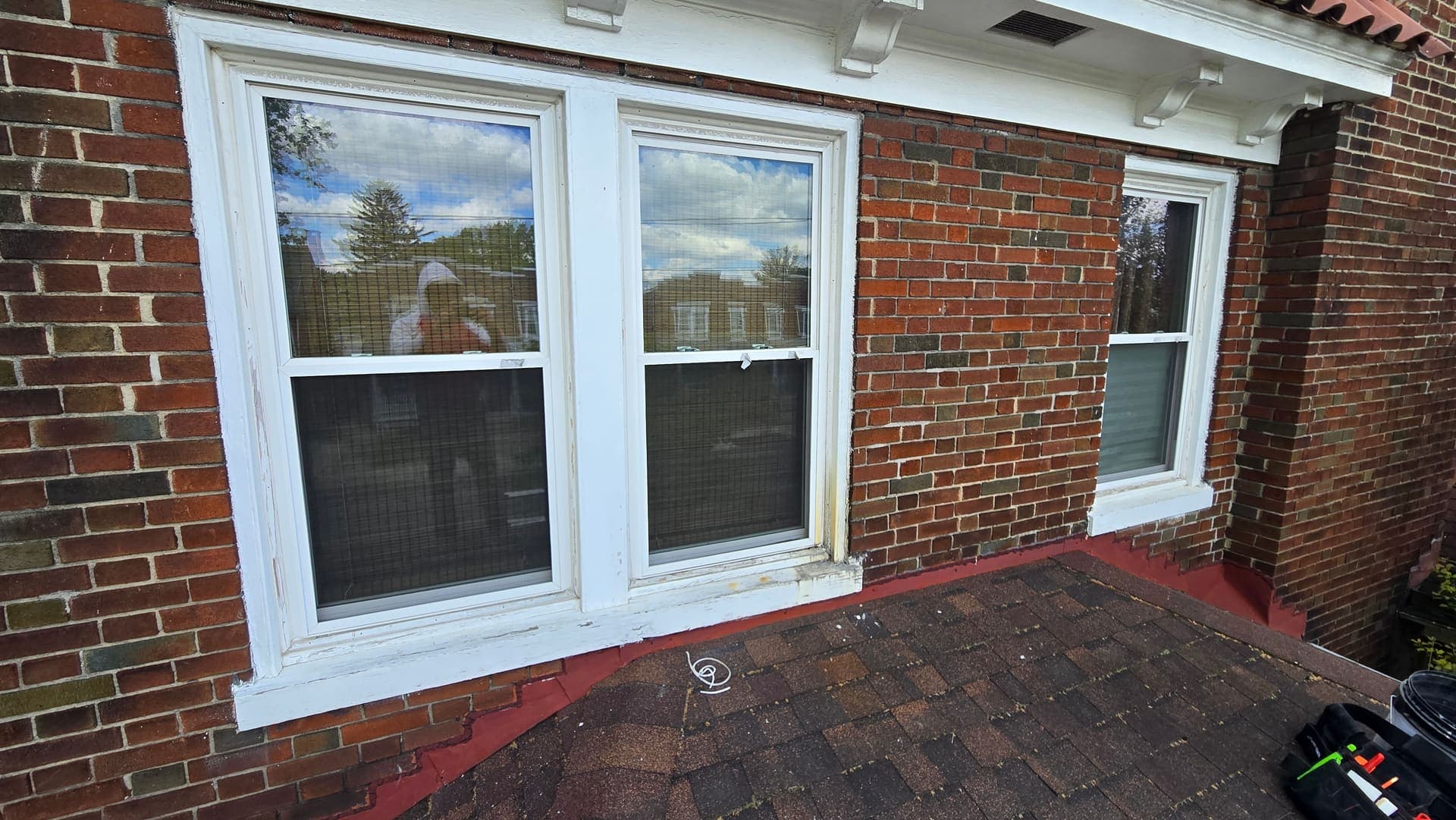
If a window quote around Lancaster County included a line item called capping and you nodded like you knew what that was, this one is for you. Capping, also called wrapping or cladding, is custom bent aluminum fitted over your exterior wood window trim so the wood never sees weather again. No more scraping, no more priming, no more paying a painter every third summer.
It is one of the highest value, least understood line items in exterior work, and it is also a job where sloppy work causes real damage you will not see for years. Here is what capping actually is, why your painted trim keeps failing in the first place, the honest cost math against the alternatives, and the situations where we tell people not to do it.
Aluminum window capping in plain words
Around every window on your house there is exterior trim: the brickmould or flat casing, the sill nose below, sometimes a header above. On most houses in this county that trim is wood, and wood outdoors needs paint, forever. Capping covers that trim with thin aluminum sheet, factory finished in your color, cut and bent to wrap each piece of trim exactly.
The result looks like crisp, freshly painted trim from the sidewalk, except it is metal with a baked on finish that holds color for decades. Rain hits aluminum, not wood. Sun hits a factory coating engineered for UV, not a hardware store paint film. The wood underneath stays dry and stops moving, which is the whole game.
A full cap job on one window usually covers the sill nose, both side casings, and the head casing, plus the little details people forget like the sill horns and any exposed jamb edges. Coil stock comes in dozens of stock colors, so matching cream, clay, tan, bronze, or plain white trim is routine, and the same material wraps door trim, fascia, and rake boards while the brake is set up.
How it is made: a brake on sawhorses in your driveway
Capping is not a stock part you order. It is fabricated at your house, on the day, from rolls of aluminum coil stock, usually 24 inches wide with finish on both faces. The tool that makes it possible is a portable brake: a long clamping bench that bends sheet metal in clean straight lines. The installer measures each piece of trim, sketches the profile, then bends a custom cover for that exact board, with returns and hems folded in.
This is why capping quality varies so much between companies. The brake does not make the part good. The person running it does. Every window on an old house is slightly different, and a good capping mechanic measures every one instead of bending 12 identical covers and caulking the differences. When you see wavy, oil canned, gap riddled capping on a house, you are looking at a fast crew, not a bad material.
Why painted exterior trim fails every 3 years in PA
South central Pennsylvania is close to a worst case climate for painted wood. Humid summers push moisture into the wood, and our winters run it through dozens of freeze thaw cycles. The wood swells and shrinks, the paint film does not, and the film cracks, usually first at joints and end grain where boards meet and drink water fastest. Once water is behind the film, it lifts the paint in sheets and feeds rot.
It compounds. Modern trim lumber is fast growth wood that moves more than the old growth trim on pre war houses, and each repaint over a partly failed surface holds a little worse than the last. Building science programs like the Penn State Housing Research Center have spent years on exactly this moisture movement problem in PA housing. That 3 year repaint cycle on your window trim is not a bad painter. It is physics, and capping ends the argument by taking the paint film out of the fight.
The 15 year math: capping vs PVC trim vs repainting forever
Run the numbers on one window over 15 years. Properly repainting the exterior trim of a window, scraping, sanding, priming, two coats, runs $80 to $150 per opening around here, and in our climate you are doing it every 3 to 4 years. That is 4 or 5 cycles, so $320 to $750 per window, and the wood is still aging underneath all of it.
Ripping the wood trim off and replacing it with cellular PVC trim runs roughly $300 to $550 per opening and never rots, which makes it the right call when the existing trim is too far gone to save. Capping sound trim typically runs $190 to $340 per window around here as a standalone job. Ours usually lands at $175 to $315, and less when we do it during window replacement, because the crew and the brake are already on site. One visit, and that window trim exits your maintenance list for 30 years.
- Repainting: $320 to $750 per window over 15 years, and the cycle never ends
- PVC trim replacement: $300 to $550 per opening, the right fix for rotted trim
- Aluminum capping: $175 to $340 once, for trim that is still sound
What good capping looks like up close
The details separate capping that protects wood from capping that quietly ruins it. First, hemmed edges: every visible cut edge should be folded back on itself, which stiffens the metal, hides the raw cut, and leaves a clean line. Exposed scissor cut edges are the signature of rushed work. Second, water logic: every piece must lap over the piece below it, the way shingles do, so gravity carries water out, never behind.
Third, restrained sealant. Caulk belongs at the top joints where capping meets siding or masonry, and it does not belong along the bottom edges, which must stay open so any water that ever gets behind the metal can drain and dry. A fully caulked perimeter looks tidy on day one and builds a terrarium behind the aluminum by year five. Fourth, fasteners: trim nails in the folds, color matched, few and hidden, not a face full of screws.
- Hemmed edges on every visible cut, no raw scissor lines
- Pieces lapped like shingles, so gravity carries water out
- Caulk at the top only, bottom edges left open to drain
- Flat, tight metal with no oil canning or waves in the sun
When NOT to cap: our honest list
Capping over rotted wood is a fresh shirt over a broken arm. It photographs well and fixes nothing. If a screwdriver sinks into the sill or the casing, the rot gets cut out and repaired first, or the trim gets replaced with PVC instead. Any capping quote that does not include probing the wood is a quote for hiding a problem, and this is the corner some low bidders cut because you cannot see it from the driveway.
Skip capping too if you are in a regulated historic district, parts of Lancaster city and several borough centers around here review exterior material changes, and wrapping original trim in aluminum can be a violation and a headache at resale. And on ornate Victorian trim with layered profiles, capping flattens detail that makes the house what it is. Paint is the right answer for showpiece trim, and we will say so even though painting is the cheaper thing for you to buy.
One more thing worth knowing on older houses: if your home was built before 1978, prepping or disturbing that painted trim falls under the EPA lead safe renovation rules. Any contractor scraping, cutting, or removing old painted trim on a pre 1978 house should be certified for lead safe practices and should be able to say so without checking with the office first.
Capping and window replacement, done in one visit
The most cost effective time to cap is the day new windows go in. The crew is set up, the brake is on the sawhorses, and the openings are already being trimmed out. New windows with bare wood trim around them is buying a new suit and keeping the old shoes: the trim will need paint years before the windows need anything.
That combination, insert windows plus full aluminum capping, is exactly what we did on this window replacement and capping project in Ephrata, and it is a standard part of our window and door installation service across Lancaster County. If you are in the Ephrata area, you have seen this exact look on half the brick houses in town: clean tan or white trim lines that have not seen a paintbrush in 20 years.
Questions we hear a lot
Does aluminum capping cause the wood underneath to rot?
Bad capping can, good capping does not. If the metal is lapped like shingles and the bottom edges are left open to drain, the wood stays drier than it ever was under paint. If every seam is caulked shut and water gets in through one failed joint, it is trapped against the wood. The material is not the risk. The detailing is.
How long does aluminum window capping last?
The aluminum itself effectively lasts the life of the house, and factory coil finishes commonly carry fade and chalk warranties in the 20 to 40 year range. Realistically, a well capped window looks sharp for 25 to 30 years and then may simply look dated in color before it ever fails.
Can you cap windows without replacing them?
Yes. If your windows are in good shape and only the painted trim keeps failing, standalone capping is a legitimate job on its own. We probe the wood first, repair anything soft, and wrap the rest. It costs more per window than doing it during replacement, but far less than the repaint treadmill.